
Getting started proof
Historical published-line fixture. This page records the public 0.3.1 full scaffold and is retained as release evidence. Published 0.4.2 uses the five-file thin contract described in Getting started; it does not reproduce this 38-file layout.
This is a public, generic proof of the first Vivary work cycle. It uses a disposable
workspace named demo-vivary-workspace; no private dogfood bundle, local project brain,
API key, customer data, or internal transcript is part of this page.
The historical proof shows that a user or agent could scaffold a workspace, prove it is healthy, see the typed graph, run review, see coordination state, and name blast radius before work.
1. Scaffold a workspace
Section titled “1. Scaffold a workspace”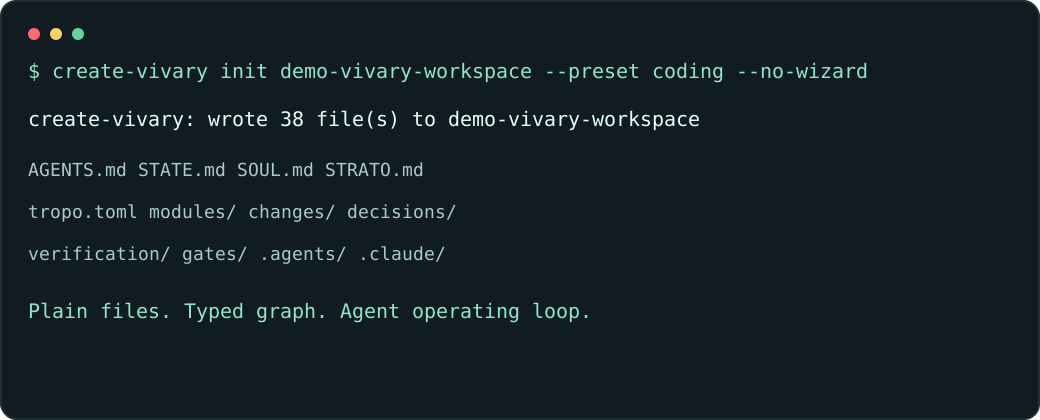
The published 0.3.1 scaffold created the agent operating shell and graph starter pack:
create-vivary init demo-vivary-workspace --preset coding --no-wizardIn the proof run, the scaffold wrote 38 files. Those files are plain Markdown, TOML, and
agent skill files: AGENTS.md, STATE.md, SOUL.md, private ignored memory placeholders,
tropo.toml, starter graph folders, and Claude/Codex skill surfaces.
2. Prove workspace health
Section titled “2. Prove workspace health”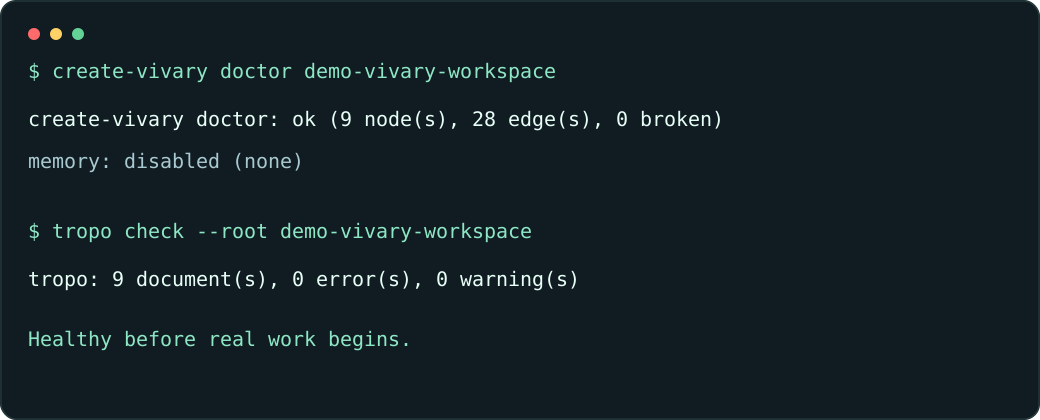
Vivary’s first promise is not “trust me.” It is “run the checks”:
create-vivary doctor demo-vivary-workspacetropo check --root demo-vivary-workspaceThe proof run reported:
doctor: 9 nodes, 28 edges, 0 broken refs.memory: disabled, because no optional semantic-memory provider was requested.tropo check: 9 documents, 0 errors, 0 warnings.
That gives a user and an agent a visible baseline before any real work begins.
3. Run review and coordination
Section titled “3. Run review and coordination”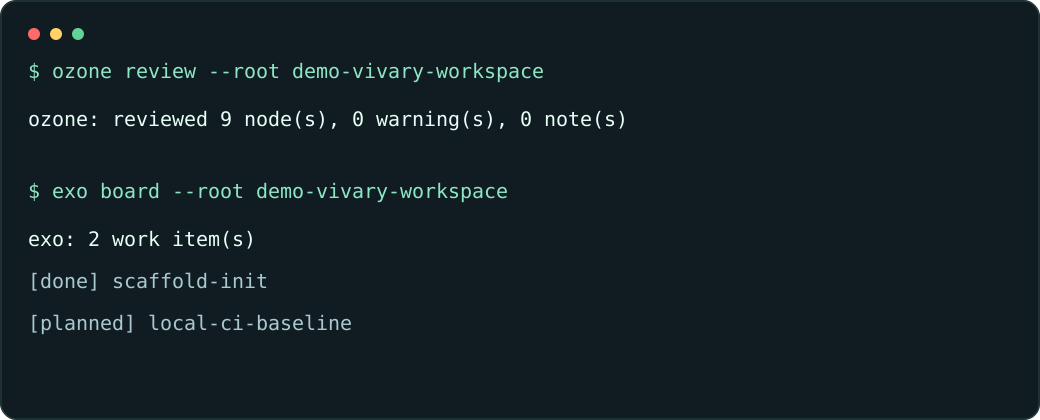
The next part of the product loop is review and coordination:
ozone review --root demo-vivary-workspaceexo board --root demo-vivary-workspaceThe proof run reported a clean graph-aware review and the starter work board:
ozone: reviewed 9 nodes, 0 warnings, 0 notes.exo: 2 work items:scaffold-initdone andlocal-ci-baselineplanned.
This is the difference between a generated folder and a workspace an agent can operate: there is a review gate and an explicit next-work surface.
4. Name impact before changing things
Section titled “4. Name impact before changing things”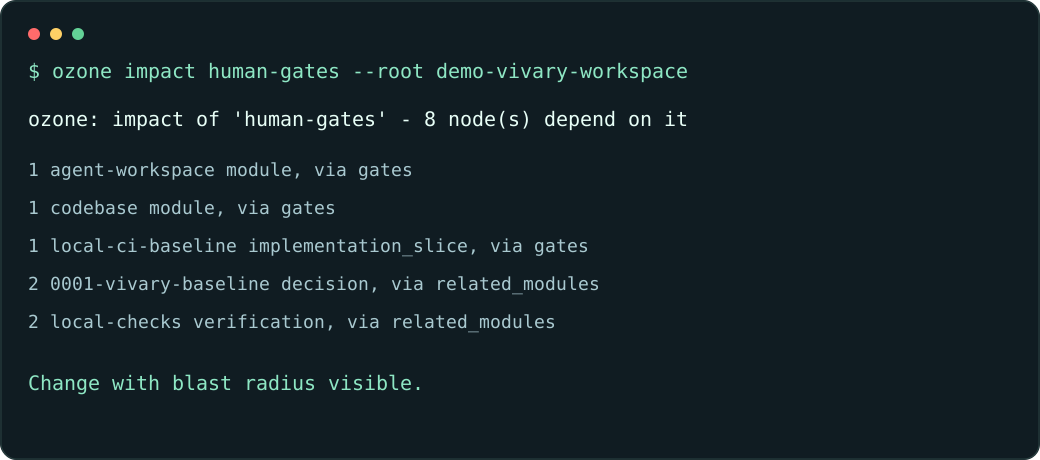
Before a risky edit, Vivary can show what depends on a graph node:
ozone impact human-gates --root demo-vivary-workspaceThe proof run found 8 dependent nodes, including the starter modules, verification records, baseline decision, and implementation slices. That is the product thesis in one command: the agent can see blast radius before it changes the workspace.
What this proves
Section titled “What this proves”- A fresh user can create a workspace without learning the whole architecture first.
- The workspace has visible health checks, not just generated files.
- The graph is typed and queryable from deterministic local files.
- Review and coordination are part of the default loop.
- Private runtime/memory surfaces are excluded from the public proof.
What this does not prove yet
Section titled “What this does not prove yet”This walkthrough intentionally does not include private dogfood evidence or optional provider runtime calls. The next productization gates are:
- Semantic memory in an incognito, privacy-first mode: optional, explicit, and never default.
- Typed semantic search over Tropo graph truth, tracked in #20, returning Vivary node ids and paths rather than opaque chunks.
Those belong in separate feature PRs so each can run CI and review cleanly.